Tyre Blowout While Driving: The One Reaction That Keeps You Safe
Published: 15 April 2026 · iTyreCare Technical Team · 5 min read
UAE road safety data shows tyre-related failures remain among the top causes of highway breakdowns every year. Panic causes more damage than the blowout itself — here is the right response.
What the Car Is Telling You
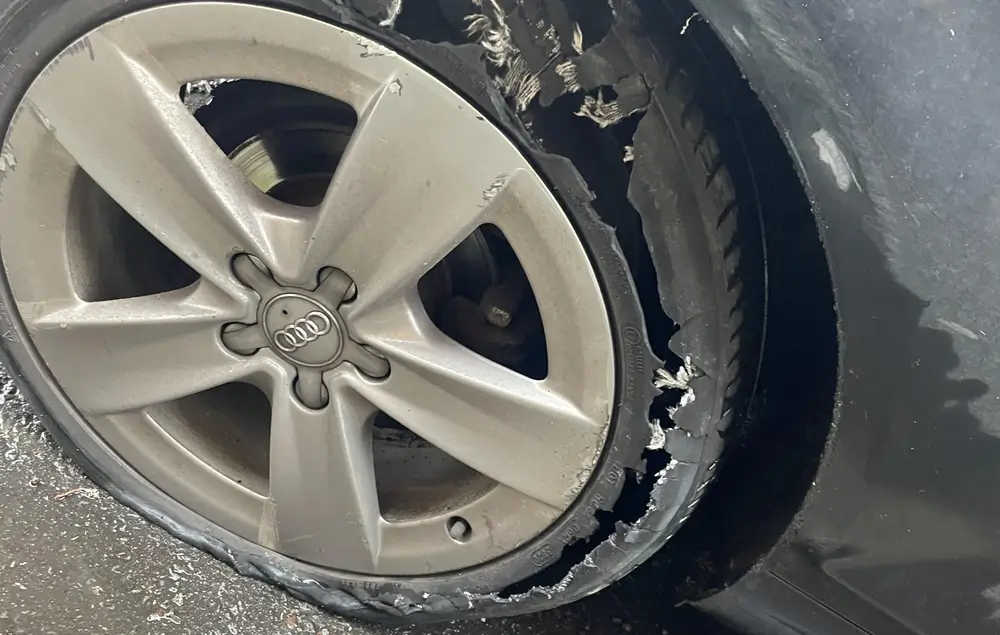
A sudden tyre failure sounds and feels nothing like a slow puncture. There is a sharp explosive bang, then a rush of air escaping fast, then a flapping rhythm as the flat tyre slaps the road repeatedly.
A front blowout pulls the steering sharply to one side. A rear blowout brings a swaying, unstable feeling that can quickly turn into dangerous fishtailing. Both feel alarming, but neither has to end badly with the right response behind the wheel.
The Reaction That Makes It Worse
Stamping on the brakes feels like the natural response but it genuinely makes things worse. Hard braking throws the full weight of the car onto the already damaged tyre and losing control becomes very likely at that point.
With a rear tyre blowout, that sudden weight shift feeds the fishtail effect and the car can spin before there is any time to react. Jerking the wheel at speed with a flat tyre dragging underneath is just as dangerous and risks flipping the vehicle entirely.
The honest truth is that most blowouts give warning signs long before they happen. Worn treads, sidewall bulges, and vibrations that just do not feel right are all signals that something needs attention. Acting on those early through a professional tyre repair and puncture check at iTyreCare is always going to be easier than managing a blowout on a busy UAE road.
Grip, Ease Off, Steer Across
The moment a blowout happens, grip the steering wheel firmly with both hands. The car will pull hard toward the blown tyre. Use steady, gentle counter pressure to keep it going straight rather than fighting it aggressively.
Next, lift the foot off the accelerator and let the car slow itself down. The flat tyre creates natural rolling resistance that does a lot of the deceleration work on its own. This also keeps the weight balanced across all four wheels as speed drops.
Once the car feels stable and speed has come down noticeably, apply light, gradual brake pressure to bring it to a stop. No sudden inputs, no pumping — just smooth and steady all the way through.
Switch the hazard lights on as soon as things feel manageable. Check the mirrors and move gradually toward the hard shoulder or the nearest safe spot. Keep every movement slow and predictable so surrounding traffic has time to react.
Stopping Safely and What Comes Next
Once the car is fully stopped, apply the handbrake and take a breath before doing anything else. Keep the seatbelt on and only step out when it feels genuinely safe. Put on a high-visibility vest and place a warning triangle well behind the car before going anywhere near the tyres.
If the spot is quiet, flat, and away from traffic, changing the tyre is a fair option. Work carefully and never rush the process. Worth noting though — a tyre blowout at speed can rattle suspension components around the wheel too. If anything feels different after the change, a suspension repair check is absolutely worth it before heading out.
On a motorway, at night, or in rough weather, calling roadside car recovery is the smarter call. Get well away from the carriageway, wait behind the barrier, and let the professionals take it from there.
Keeping Blowouts From Happening at All
Underinflation is the leading cause of sudden tyre failure and also one of the easiest things to stay on top of. Checking tyre pressure monthly and before any long journey takes only a couple of minutes.
Worn tread, sidewall cracks, and bulges all signal that a tyre is living on borrowed time. Replace tyres well before they hit the UAE legal minimum of 1.6mm. Potholes and kerb strikes do quiet damage that builds up over time without any obvious signs.
Routine servicing that includes a professional oil change and full vehicle health check is also where developing tyre problems tend to get caught early. Staying ahead of the issue is always easier than managing a blowout on Sheikh Zayed Road.
Frequently Asked Questions
What causes a tyre blowout while driving?
Underinflation, worn tread, overloading, and pothole damage are the most common causes. UAE summer heat accelerates the problem, especially in tyres already running low on air.
Should the brakes be applied hard immediately after a blowout?
No, hard braking after a blowout destabilises the car quickly. Ease off the accelerator first and let the vehicle slow down at its own pace.
Is it safe to keep driving on a blown tyre?
No, even slow driving on a flat causes serious damage to the rim and suspension. Pull over to a safe spot as soon as the road allows.
How far can a space-saver spare tyre go?
Space-saver tyres are designed for short distances at under 80 km/h only. Get a proper full-size replacement fitted as soon as possible.
Can a blowout damage more than just the tyre?
Yes, the rim, suspension arms, and wheel arch can all take damage. Always inspect these areas before returning to normal driving.
How often should tyres be checked to prevent blowouts?
Check tyre pressure monthly and inspect tread depth and sidewalls every couple of weeks. Always check after hitting a pothole or clipping a kerb hard.
Book a Tyre Inspection at iTyreCare
Do not wait for a blowout on the highway. Get your tyres professionally checked at iTyreCare Al Quoz — open 7 days a week.