Open Daily · 9 AM – 9 PM 1 - D65 Al Manara St - East - Al Quoz - Dubai
Brakes & Safety

Is Your Car Safe to Drive? 10 Brake Problems Every Driver Should Know

Brakes rarely fail without warning. Learn the 10 most common brake problems, what causes them, which ones you can monitor, and which mean you should stop driving.

iT
By iTyreCare Technical Team Senior Technician, iTyreCare Al Quoz
Last reviewed: April 2026
16 min read
Car brake problems every driver should know - iTyreCare Dubai

Your brakes rarely go from perfectly normal to completely ineffective without warning. In many cases, the car gives you clues first: a new squeak, a grinding sound, vibration through the steering wheel, a pedal that feels softer than usual, or a vehicle that suddenly needs more distance to stop.

The difficult part for drivers is knowing which brake symptoms can be monitored and which require immediate attention.

A small change in braking behaviour can indicate normal wear, but it can also point to worn brake pads, damaged brake discs, sticking calipers, deteriorated brake fluid, hydraulic leaks, or faults within modern electronic braking systems.

Understanding these warning signs helps you make a better decision about whether your car needs routine maintenance, an early inspection, or should not be driven until the braking system has been checked.

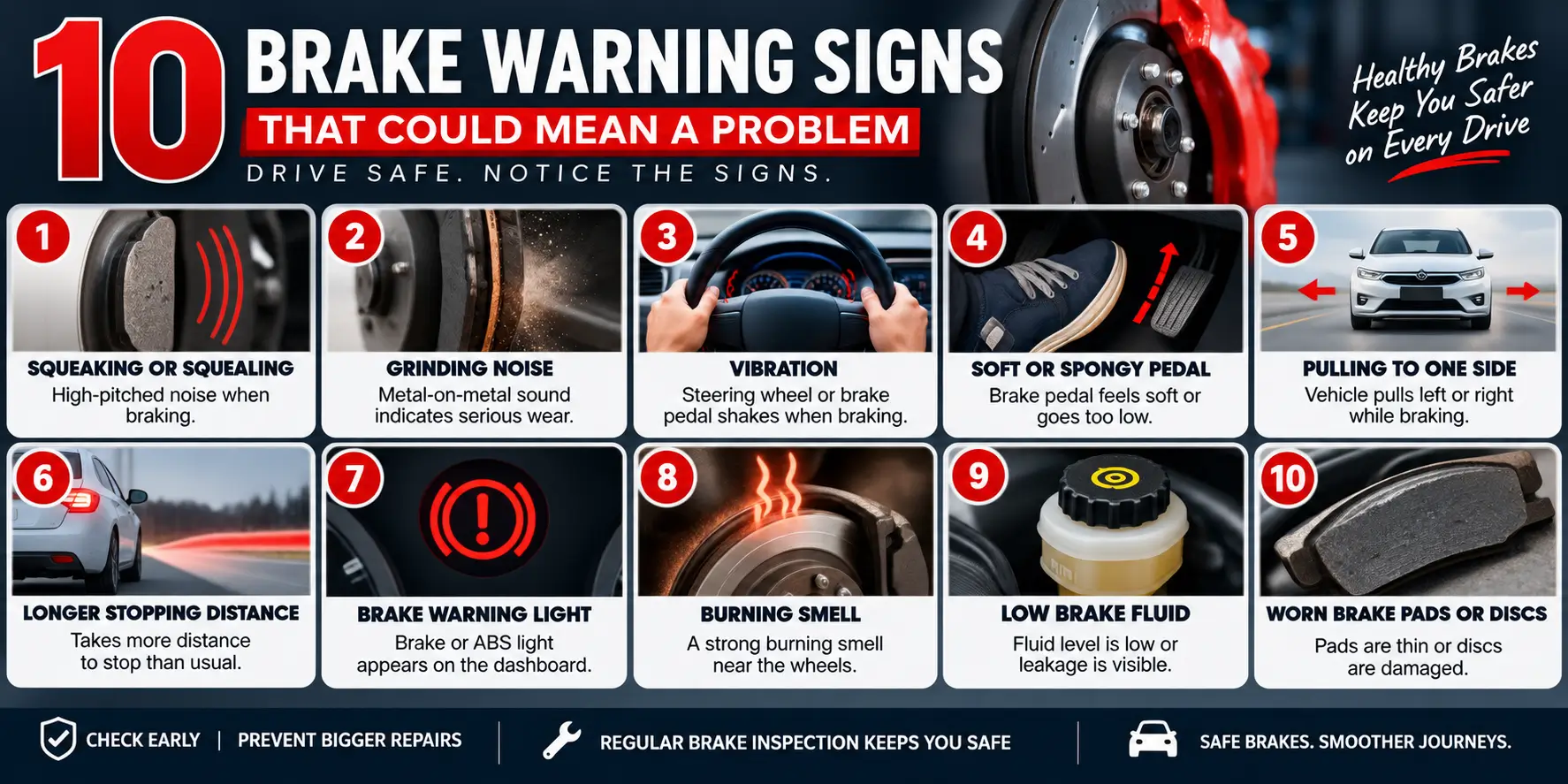
Here are 10 car brake problems every driver should know, what may cause them, and what you should do when they appear.

10 Car Brake Problems Every Driver Should Know

1. Squeaking or Squealing When You Brake

Squeaking or squealing when you brake - brake pad wear indicator explained by iTyreCare Dubai

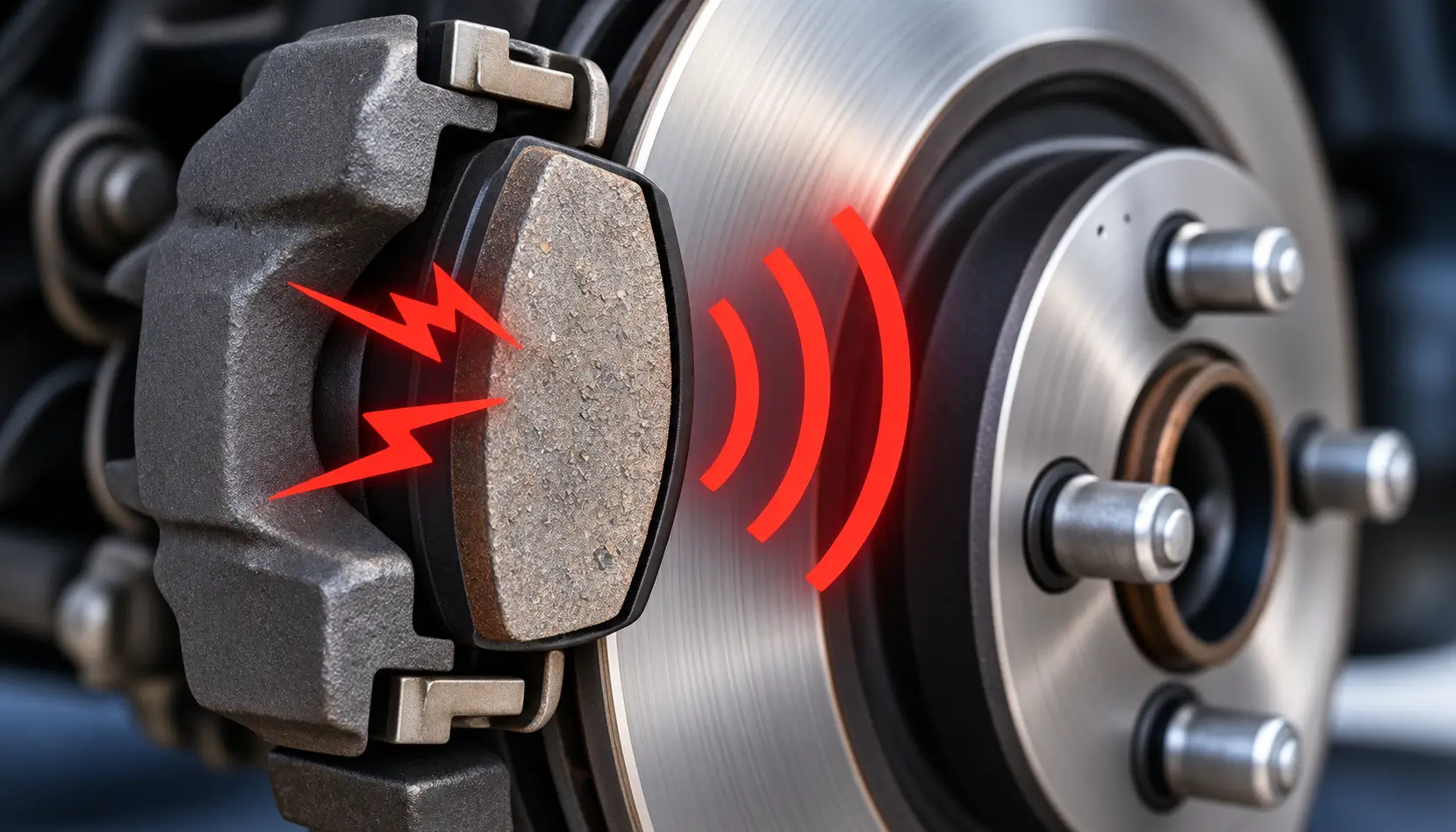
One of the first brake-related changes many drivers notice is a high-pitched squeak or squeal when pressing the brake pedal.

It does not necessarily mean your brakes are about to fail.

Some brake pads incorporate wear indicators that produce a noticeable sound as the friction material becomes thin. However, squeaking can also result from brake dust, moisture, surface corrosion, glazed friction surfaces, vibration, or the characteristics of the brake pad material itself.

You may occasionally hear brake noise after the vehicle has been parked overnight, washed, or exposed to rain. A thin layer of surface rust can develop on the brake discs and may disappear after normal braking.

When should you be concerned?

Pay closer attention when the noise:

  • Happens consistently
  • Becomes progressively louder
  • Appears every time you brake
  • Is accompanied by vibration
  • Comes with reduced braking performance
  • Changes from squeaking to grinding

Persistent brake squeaking is worth inspecting rather than simply assuming that new brake pads are required. The technician should identify the source of the noise and check pad thickness, disc condition, calipers and associated hardware.

2. Grinding Noise From the Brakes

Grinding is considerably more concerning than an occasional squeak.

One possible cause is brake pads that have worn so far that little usable friction material remains. This can allow harder components to contact the brake disc, potentially damaging its surface.

However, grinding should not be diagnosed by sound alone. Foreign material, damaged hardware or other mechanical problems can sometimes produce similar noises.

Why shouldn’t grinding brakes be ignored?

A braking problem that initially requires relatively straightforward maintenance can become a larger repair if damaged components continue operating against each other.

More importantly, severe brake wear can affect braking performance.

If you hear persistent grinding when applying the brakes, avoid unnecessary driving and arrange a brake inspection promptly.

The longer severe mechanical wear continues, the greater the possibility of additional component damage.

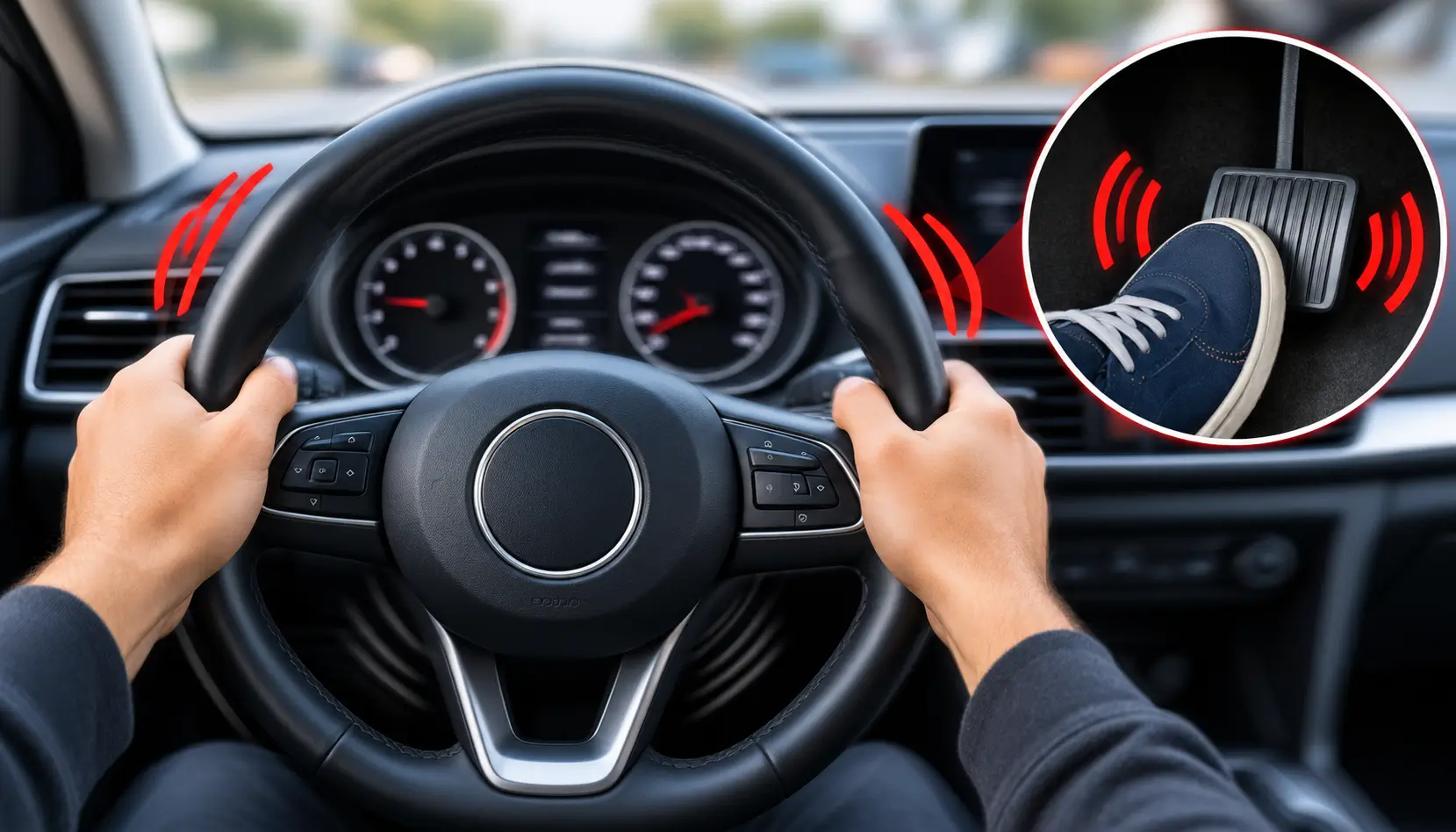
3. Steering Wheel Shakes or Brake Pedal Vibrates

Steering wheel shakes or brake pedal vibrates when braking - causes explained by iTyreCare Dubai

Your vehicle should normally slow smoothly when you apply the brakes.

If the steering wheel shakes or the brake pedal pulsates during braking, something deserves investigation.

Drivers often describe this as having “warped rotors.” In reality, several conditions can create braking vibration, including disc thickness variation, uneven friction deposits, excessive runout, heat-related changes, worn components, or problems elsewhere in the wheel, steering or suspension system.

The speed at which the vibration occurs and whether it appears only during braking can provide useful diagnostic clues.

Should you just replace the brake discs?

Not necessarily.

A technician should inspect and measure the relevant components before recommending replacement. In some cases brake disc skimming may restore the surface instead.

Simply replacing parts without identifying the cause can mean the vibration eventually returns.

4. Soft or Spongy Brake Pedal

The brake pedal should have a reasonably consistent feel.

If it suddenly feels softer, spongier, or travels farther toward the floor than normal, do not dismiss the change.

The braking system in most vehicles depends on hydraulic pressure. Problems that interfere with this pressure can alter pedal feel.

Possible causes include:

  • Air within the hydraulic system
  • Brake fluid leakage
  • Deteriorated brake hoses
  • Problems with the master cylinder
  • Brake fluid-related issues
  • Problems associated with other hydraulic components

A pedal that feels slightly different from yesterday is therefore more useful information than many drivers realize.

Is a soft brake pedal safe?

A significant or sudden change in pedal feel should be treated seriously.

If the brake pedal approaches the floor or braking performance has noticeably deteriorated, continuing to drive normally may be unsafe. Have the braking system professionally assessed.

5. Car Pulls Left or Right When Braking

When braking on a reasonably level road, your car should remain predictable and controllable.

If it repeatedly pulls strongly toward one side when you press the brakes, braking force may not be distributed evenly.

Possible causes include a sticking or seized brake caliper, uneven pad wear, contaminated friction surfaces, hydraulic problems, or another mechanical issue.

However, brakes are not the only possibility.

Tyre condition, tyre pressure, wheel alignment and suspension problems can also affect how a vehicle behaves during braking.

What should you do?

Do not simply compensate by holding the steering wheel in the opposite direction.

Have the vehicle inspected so the actual source of the pulling can be identified.

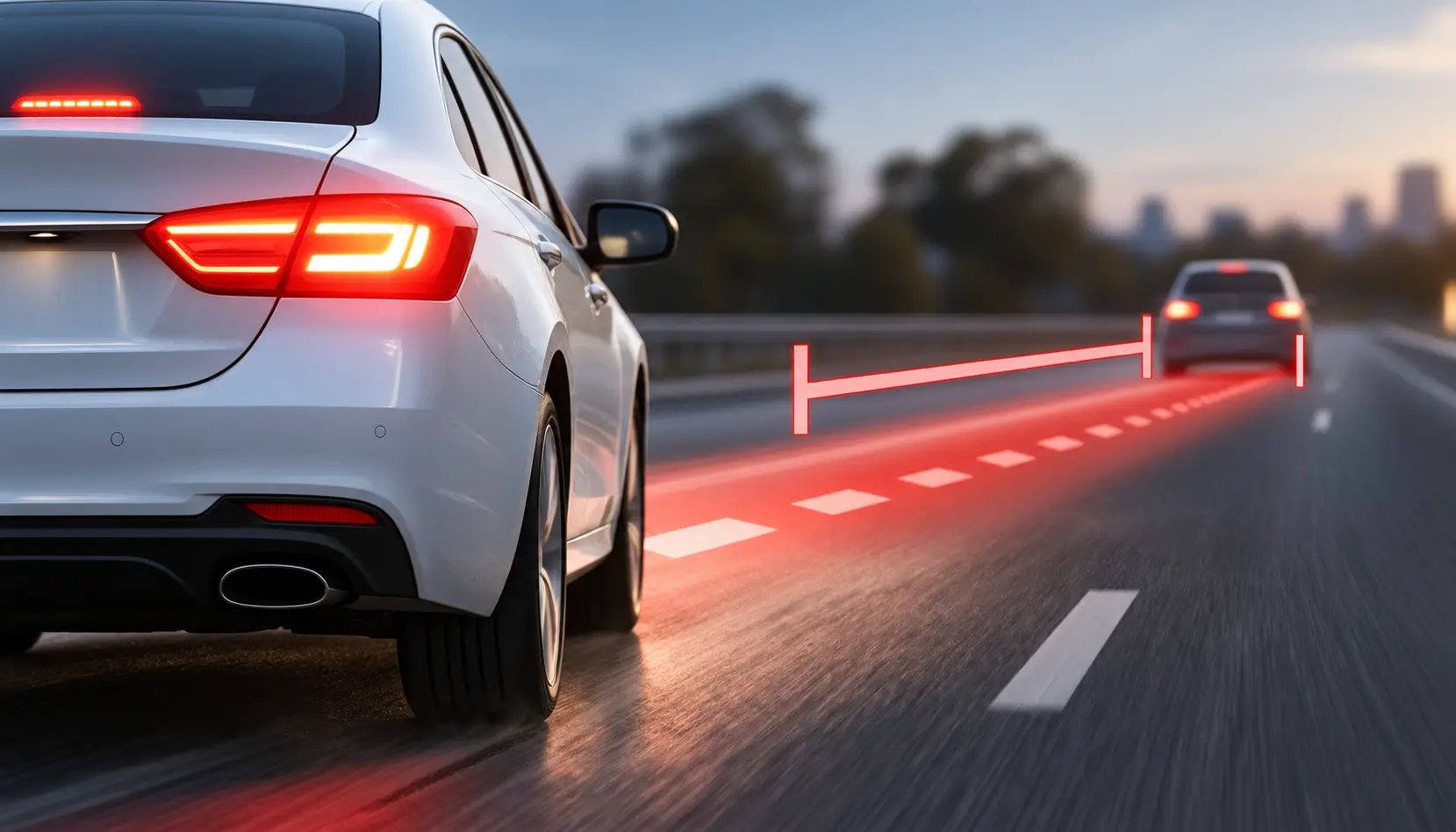
6. Your Car Takes Longer to Stop

Car taking longer to stop - increased braking distance explained by iTyreCare Dubai

This is one of the most important changes a driver can notice.

If your usual braking pressure no longer produces the stopping response you expect, the vehicle needs attention.

Reduced braking effectiveness may be associated with worn friction components, overheated brakes, contaminated pads or discs, hydraulic issues, or other faults.

But remember that stopping distance does not depend on the braking system alone.

It is also affected by:

  • Vehicle speed
  • Tyre condition and grip
  • Road surface
  • Weather
  • Vehicle load
  • Suspension condition
  • Driver reaction time

This distinction matters because fitting new brake pads cannot compensate for badly worn tyres or poor road grip.

A useful driver habit

Become familiar with how your car normally responds to the brake pedal.

A gradual deterioration can be difficult to notice because drivers subconsciously adapt by pressing the pedal earlier or harder.

That is one reason routine brake inspections remain valuable even when there is no dramatic warning symptom.

7. Brake or ABS Warning Light Stays On

Modern vehicles monitor various parts of the braking system electronically.

A brake-related warning light can indicate different conditions depending on the vehicle. It might relate to the parking brake, brake fluid level, brake pad wear monitoring, ABS, electronic stability systems, or another detected fault.

The exact meaning should therefore be checked against the owner’s manual for your particular vehicle.

What if the ABS light comes on?

An illuminated ABS warning light can indicate that the anti-lock braking system has detected a fault.

The vehicle may still have conventional braking capability depending on the specific problem, but functions designed to prevent wheel lock during emergency braking may be affected.

Do not guess based solely on the dashboard symbol.

Modern vehicles can store diagnostic trouble codes that help technicians identify the system or component requiring further investigation.

If multiple brake-related warning lights appear together or the warning is accompanied by a noticeable reduction in braking performance, the situation deserves more urgent attention.

8. Burning Smell After Braking

A strong burning smell near one or more wheels should not be considered normal.

Brakes generate heat because they slow the vehicle through friction, but excessive heat can indicate that a component is not operating correctly.

Potential causes can include:

  • A sticking brake caliper
  • Brake pads remaining in contact with a disc
  • Parking brake problems
  • Repeated aggressive braking
  • Long downhill braking
  • Other forms of excessive friction

You may also notice unusual heat from a particular wheel or deterioration in braking behaviour.

Why does overheating matter?

Excessive temperature can affect friction materials and other braking components. Under severe conditions, braking effectiveness can temporarily deteriorate.

If you suspect that a brake is binding or overheating, avoid repeatedly driving the vehicle until the cause has been identified.

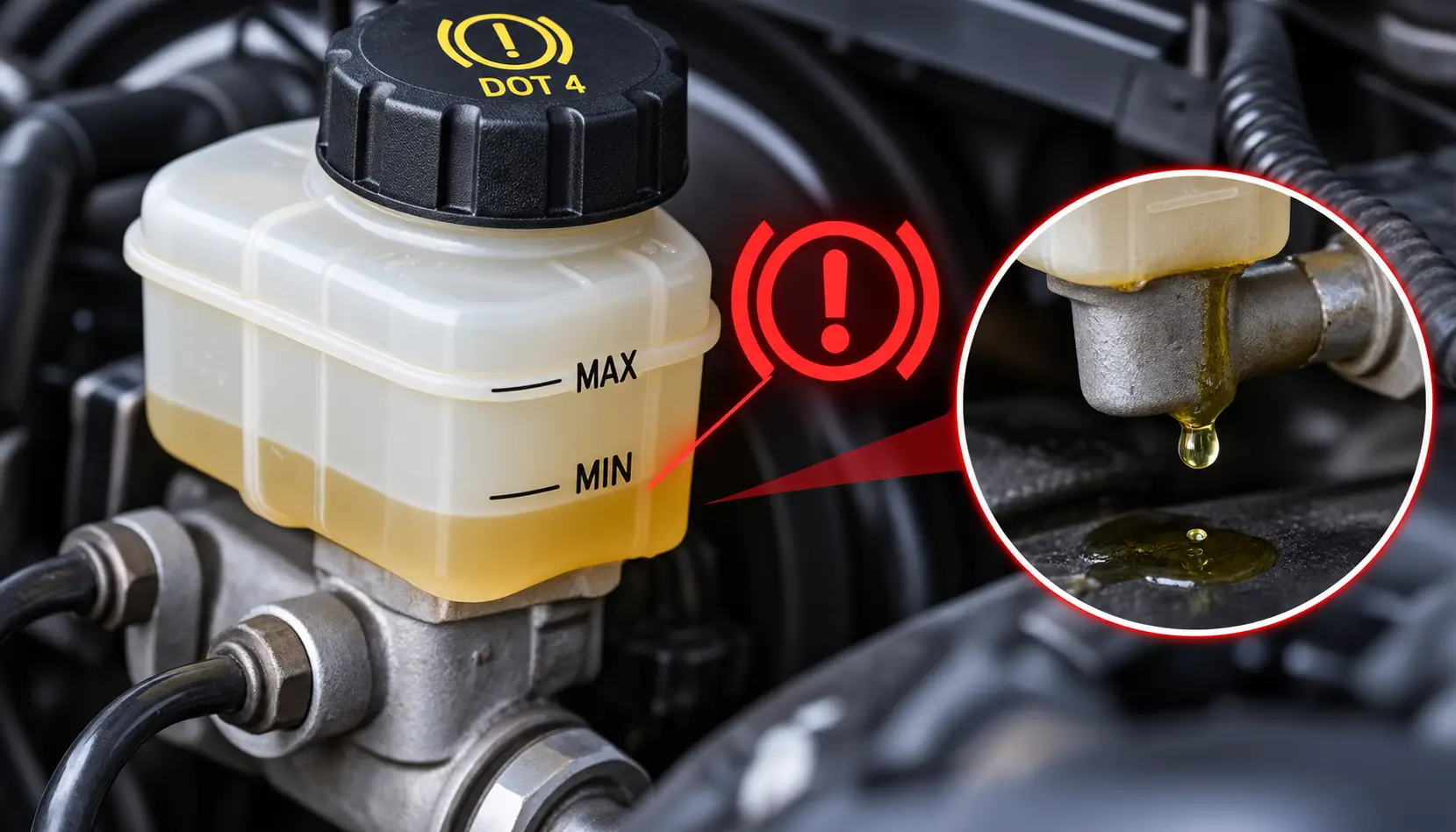
9. Brake Fluid Is Low or Leaking

Brake fluid low or leaking - brake fluid reservoir check by iTyreCare Dubai

Brake fluid is not simply another vehicle lubricant. It plays a fundamental role in transferring hydraulic pressure through the braking system.

A visible leak or unexplained reduction in brake fluid level deserves investigation.

Leaks can potentially occur around hydraulic lines, hoses, calipers, wheel cylinders, master cylinders, or other system components.

Simply topping up the reservoir without understanding why the level changed can hide the underlying problem.

Brake fluid level can also change as friction components wear, so diagnosis should consider the complete system rather than assuming every level change means the same thing.

Why does brake fluid condition matter?

Brake fluid can absorb moisture over time, which changes its characteristics. Manufacturers therefore specify particular fluid types and maintenance requirements.

Always use the brake fluid specification recommended for your vehicle.

Brake fluid service should be based on manufacturer guidance and system condition rather than a universal rule applied to every car.

10. Brake Pads or Discs Are Excessively Worn

Brake pads and discs are wear components.

Every time you slow down, friction converts the vehicle’s kinetic energy into heat. Over thousands of braking events, the friction material gradually wears.

But there is no universal mileage at which every car requires brake pad replacement.

Brake life varies according to:

  • Driving style
  • Vehicle weight
  • Traffic conditions
  • Brake design
  • Brake pad material
  • Highway versus city use
  • Vehicle load
  • Terrain
  • Condition of related components

A driver spending most of the day in stop-and-go traffic may experience a very different wear pattern from someone primarily travelling long highway distances.

Should brake discs be changed with every set of pads?

No.

Brake discs should be inspected and measured.

Technicians may consider disc thickness, scoring, cracking, surface condition, heat damage and other manufacturer specifications before determining whether the disc remains serviceable.

Replacing parts based on measurements and condition is better than automatically replacing everything in the braking system.
Which Brake Problems Mean You Should Stop Driving?

Not every brake noise means that the vehicle must immediately be recovered. At the same time, brake-related symptoms should never be casually dismissed.

Arrange prompt professional inspection when you notice persistent squeaking, mild vibration, uneven pad wear, or another new change in braking behaviour.

The situation becomes more concerning if you experience:

  • A major reduction in braking power
  • Brake pedal sinking toward the floor
  • Severe grinding
  • Significant brake fluid leakage
  • Difficulty stopping the vehicle
  • Strong pulling that affects vehicle control
  • Serious overheating or smoke around a wheel

If you are uncertain whether the vehicle can stop safely and predictably, do not take an unnecessary risk by driving it to a workshop. Professional roadside assistance or vehicle recovery may be the safer option.

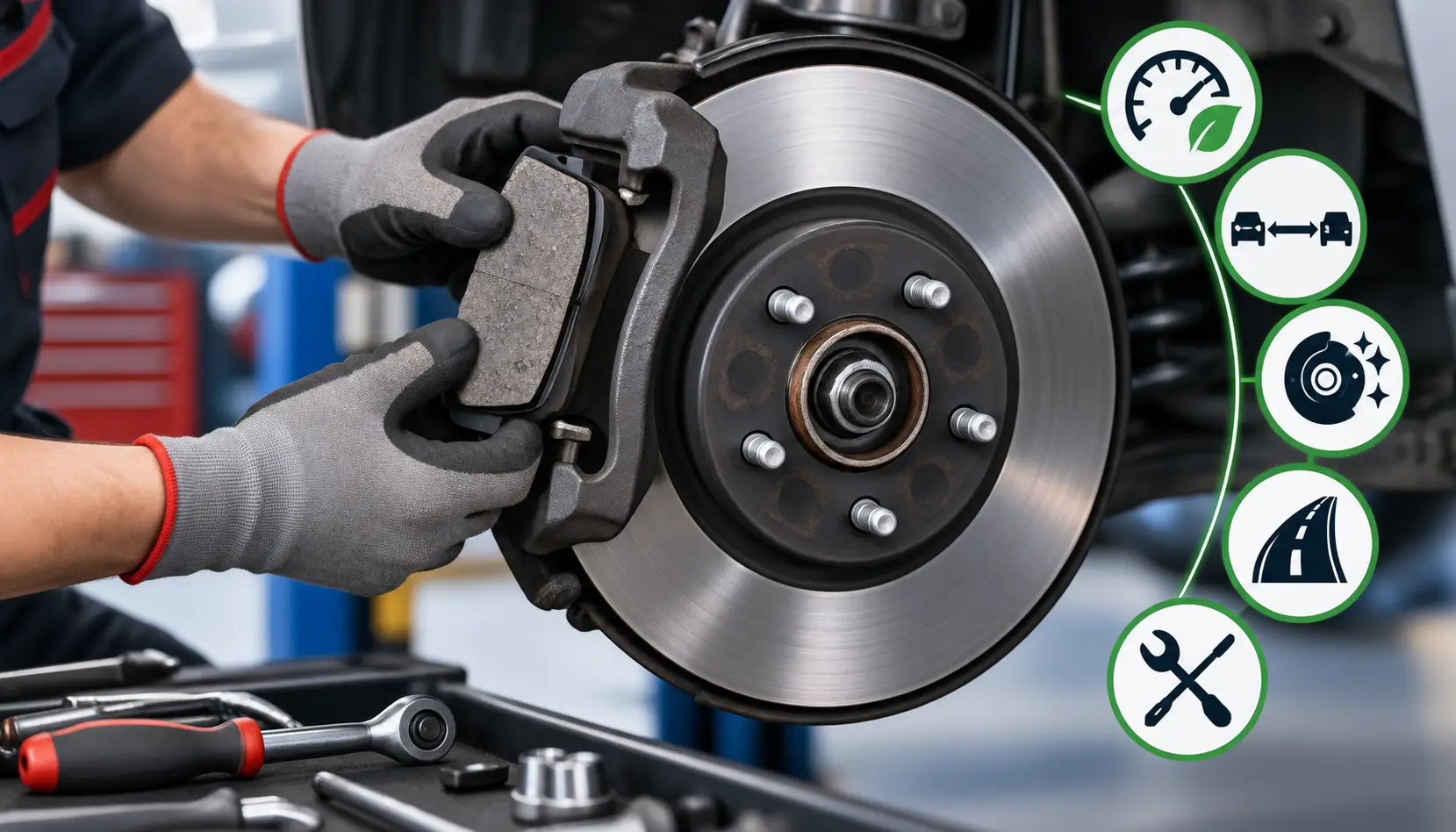
How to Make Your Car Brakes Last Longer

How to make your car brakes last longer - driving habits that reduce brake wear, iTyreCare Dubai

Good driving habits cannot prevent normal brake wear, but they can reduce unnecessary stress on the braking system.

Look farther ahead

Anticipate traffic lights, congestion and slowing vehicles. Gradual deceleration is generally easier on braking components than repeatedly accelerating and braking hard.

Maintain a safe following distance

More distance gives you additional time to slow down progressively instead of making frequent emergency-style stops.

Don’t rest your foot on the brake pedal

Unnecessary brake application can generate additional heat and accelerate wear.

Don’t ignore tyres and suspension

Braking performance depends on more than pads and discs. Your tyres provide the contact with the road, while steering and suspension components help maintain vehicle stability and tyre contact.

Investigate changes early

A minor noise or vibration may be easier to diagnose before it develops into a more extensive problem.

Brake Maintenance: What Should Actually Be Inspected?

A proper car brake inspection should involve more than looking through the wheel and estimating how much brake pad remains.

Depending on the vehicle and reported symptoms, an inspection may include:

  • Front brake pads
  • Rear brake pads or shoes
  • Brake discs or drums
  • Brake calipers
  • Brake hoses and hydraulic lines
  • Brake fluid level and condition
  • Master cylinder
  • Parking brake
  • Brake hardware
  • ABS-related components
  • Electronic parking brake
  • Dashboard warning lights
  • Diagnostic fault codes

Technicians may also need to measure pad and disc thickness rather than relying only on visual inspection.

The important question is not simply “Do I need new brake pads?”

A better question is: “Why is the braking system behaving differently, and which component is responsible?”

That approach encourages diagnosis before replacement.

Front Brakes vs Rear Brakes: Which Wear Faster?

Drivers often assume all four brakes should wear equally.

That is not necessarily the case.

During deceleration, weight transfers toward the front of the vehicle. Depending on vehicle design, this can place substantial braking demand on the front axle.

However, wear patterns vary considerably between vehicles. Electronic brake-force management, stability systems, driving conditions, regenerative braking in hybrids and EVs, and manufacturer design can all influence front-to-rear wear.

Therefore, replacing front brake pads does not automatically mean the rear pads need replacement as well.

Each axle should be assessed according to its actual condition.

Does Hot Weather Affect Your Brakes?

Vehicles operating in hot climates face demanding conditions.

Brakes already produce significant heat during normal operation. High ambient temperatures, stop-and-go traffic, heavy vehicle loads and repeated hard braking can add to the thermal demands placed on braking components.

Drivers can help by maintaining sensible following distances and avoiding unnecessary cycles of rapid acceleration followed by heavy braking.

Regular inspection is also particularly useful for vehicles exposed to demanding driving conditions.

However, heat should not automatically be blamed for every brake problem. Mechanical, hydraulic and electronic faults still require proper diagnosis.

When Should You Replace Brake Pads?

There is no reliable one-size-fits-all answer such as “every X kilometres.”

The correct replacement point depends on the vehicle manufacturer’s specifications and the actual condition of the components.

Instead of relying only on mileage, consider:

  • Remaining pad thickness: How much usable friction material is actually left?
  • Wear pattern: Are both sides wearing evenly?
  • Disc condition: Is the mating surface still within specification?
  • Driving conditions: Is the vehicle exposed to heavy city traffic or demanding use?
  • Symptoms: Are there noises, vibration, pulling or changes in braking performance?

This is why inspection-based maintenance is generally more useful than replacing brake components according to an arbitrary mileage figure.

Can You Check Your Brakes Yourself?

Drivers can observe several useful warning signs without dismantling the braking system.

Pay attention to:

  • Changes in brake pedal feel
  • New noises
  • Warning lights
  • Vehicle pulling
  • Vibration
  • Changes in stopping behaviour
  • Fluid underneath the vehicle
  • Burning smells around the wheels

Some wheels may also allow you to see part of the brake disc and pad, but a limited view should not be treated as a complete brake inspection.

Modern braking systems combine mechanical, hydraulic and electronic components. Diagnosis or repair involving safety-critical components should be performed by someone with appropriate knowledge, tools and equipment.

Why Professional Brake Diagnosis Matters

At iTyreCare, we provide professional car brake repair services in Dubai, focusing on accurate diagnosis before recommending replacement parts. Brake vibration, noise, poor stopping performance, or pulling to one side does not always mean the brake pads or discs are the only problem. The cause may involve a sticking caliper, brake fluid, ABS components, tyres, steering, or suspension.

Our experienced brake technicians inspect front and rear brakes, brake pads, discs, rotors, calipers, brake fluid, hydraulic components, and electronic braking systems using professional tools and diagnostic equipment.

Rather than replacing parts unnecessarily, iTyreCare identifies the root cause and recommends the appropriate repair. With comprehensive inspection, quality replacement parts, and specialist car service in Dubai, iTyreCare aims to be a trusted choice for drivers looking for reliable car brake repair in Dubai and safer, more consistent braking performance.

Frequently Asked Questions About Car Brake Problems

What are the first signs of brake problems?

Common early signs include persistent squeaking, unusual pedal feel, vibration, increased stopping distance, pulling while braking, grinding noises, warning lights or changes from the way your car normally brakes.

Is it safe to drive with squeaking brakes?

Occasional squeaking can have relatively minor causes, but persistent noise should be investigated. If squeaking occurs with grinding, vibration, poor braking performance or unusual pedal behaviour, arrange an inspection promptly.

Can I drive with grinding brakes?

Persistent grinding can indicate severe wear or another mechanical problem. Continued driving may cause further component damage and potentially affect braking performance. Have the brakes inspected as soon as possible.

Why does my car shake when I brake?

Brake disc thickness variation, uneven friction deposits, heat-related issues or other braking problems can cause vibration. Wheel, tyre, steering and suspension conditions can produce similar symptoms, so diagnosis is important.

Why does my brake pedal feel soft?

Possible causes include air in the hydraulic system, brake fluid leakage, deteriorated hoses, master cylinder problems or other hydraulic faults. A sudden or substantial change in pedal feel deserves prompt inspection.

How often should brakes be inspected?

Follow the maintenance guidance provided by your vehicle manufacturer. An additional inspection is appropriate whenever braking behaviour, pedal feel, noise or warning indicators change.

Do I need to replace brake discs every time I replace brake pads?

No. Brake discs should be measured and inspected. Replacement depends on their thickness, surface condition, damage and manufacturer specifications rather than simply whether the pads are being replaced.

Why does my car pull to one side when braking?

Uneven braking force, a sticking caliper, friction-material problems or hydraulic issues may cause pulling. Tyre, alignment and suspension conditions can also contribute.

Can bad brakes increase stopping distance?

Yes. Worn, damaged, contaminated, overheated or malfunctioning braking components can affect braking performance. Tyres, speed, road conditions, vehicle load and other factors also influence stopping distance.

Should front and rear brake pads be replaced at the same time?

Not automatically. Front and rear brakes can wear at different rates. Each axle should be inspected and replacement should be based on its actual condition.

What does a brake warning light mean?

The meaning varies by vehicle. It can relate to the parking brake, brake fluid, pad wear, ABS or another detected fault. Consult the vehicle manual and obtain diagnosis when the warning remains illuminated.

Can hot weather damage car brakes?

High ambient temperatures combined with heavy traffic, repeated hard braking and high vehicle loads can increase thermal stress. However, overheating and other brake symptoms can also have mechanical causes that require diagnosis.

How do I know whether I need brake pads or a complete brake repair?

The answer depends on inspection. If the problem is limited to normal pad wear, pad replacement may be sufficient. Damaged discs, sticking calipers, hydraulic faults or other component problems can require additional repairs.

What should be checked during brake maintenance?

Brake maintenance can include pads, discs, drums, shoes, calipers, hydraulic lines, hoses, brake fluid, parking brake and electronic systems such as ABS, depending on the vehicle.

When is a brake problem an emergency?

A substantial loss of braking power, pedal sinking toward the floor, significant fluid leakage, difficulty stopping, smoke or severe loss of vehicle control during braking can indicate a serious problem. If the vehicle cannot be driven safely, arrange roadside assistance or recovery rather than driving it to a workshop.

Noticed a Change in Your Brakes?

Book a free brake inspection at iTyreCare Al Quoz. Our technicians measure pad and disc condition, check calipers, brake fluid and hydraulic lines, and read diagnostic fault codes — then explain exactly what your brakes need before any work begins.

Request a Callback

About the Author

iT

iTyreCare Technical Team

Senior Technicians at iTyreCare Al Quoz, Dubai

Serving the UAE since 2018 with expert car repair, tyre, and alignment services. Our technical team combines decades of hands-on workshop experience with a commitment to honest diagnostics and transparent pricing.

WhatsApp Call Now